The Woman, the Children, the Overcrowded Tube and Leadership

What does an overcrowded Underground platform have to do with leadership, pressure, and the way we shape our lives?

Nothing.

And everything.

On Saturday, I travelled into London by train. All went smoothly, until I tried to catch a Tube on a line backed up by signal failures.

At the entrance to the platform I met a wall of bodies, with people crowded six layers deep.

Around me, people began to react. Some complained. Some sounded anxious. Two men loudly discussed alternative transportation (There wasn’t any!)

A young man pushed his way through the crowd, his movements made with sharp frustration. I felt his anger before I saw his face.

I waited with my backpack heavy on my back. Its size was reassuring, making me more solid, but unfortunately also vulnerable to being bumped as people tried to move past.

Sweating, I began to regret the jacket I wore. In the crush of the crowd, there was no way I could remove it without elbowing someone.

With each passing minute, more and more people arrived behind me.

I heard someone say, “I hope there isn’t a stampede. We can’t move anywhere.”

I noticed my system begin to react to the situation: My body felt tighter. My mind was alert. I scanned the room looking for anything that might be an exit.

The crowd shifted together, like one body in turmoil, as each overcrowded train came, and went. Disembarking passengers fought their way through the crowd. A lucky few pushed against them to claim the few spaces available on the arriving trains.

Suddenly, I found myself standing behind a mother and two young children. Surrounded by the crowd of adults twice their size, the children held their mother’s hands and looked to her for reassurance.

Every few seconds, the girl looked up at her mother’s face as if asking a silent question,

“Are we safe?”

Every time, the mother answered before speaking a word. Through her steadiness, she held her children. Despite the situation, she was calm, “We’re OK,” she repeated. Peace radiated from her and extended palpably beyond her children into the crowd around.

Slowly, I positioned my body to be a shield for the child who was closest to me. I marvelled at this mother’s presence in a situation that could have quickly become dangerous for her little ones. I felt awe at their trust in her when I could easily imagine them panicked and crying.

I could feel my system responding to the situation. But I also knew that my reaction did not have to become my identity in that moment. I stayed consciously attentive to my breath and the sensory awareness of my feet on the ground. Intentionally, I stayed in my body. Over and over, I kept returning to myself.

How we meet moments like this becomes how we meet life itself.

The patterns we practice unexpected pressure situations are the patterns that will appear as we lead ourselves in business, or as parents.

I could see that mother’s leadership. Its power was based in her softness, not reactivity. Despite the crush of bodies, she exuded spaciousness.

One steady human being can change the atmosphere of an entire environment.

Not through force. Not through strategy.

But through presence.

And most of all, through the capacity to remain open inside pressure.

We were all together stuck in the same experience — the press of the crowd, the building heat and the edge of panic that lined the platform.

And yet, people had radically different experiences.

Some shifted into anxiety.

Some into frustration. Or aggression.

One mother became steadiness.

As for me, I consciously worked to remain internally open.

People do not see the world as it is. They see the world as it occurs for them.

And how it occurs is shaped by context. Context can be consciously chosen.

You may not be standing on an overcrowded platform right now. But perhaps you have your own version of this experience. Perhaps it looks like:

  • deadlines

  • financial pressure

  • parenting challenges

  • holding everyone else together

  • health issues

  • making decisions when exhausted

  • never being able to fully switch off

Yes, your external circumstances matter.

But your inner capacity shapes how you experience any situation.

This is the deeper work of capacity.

Of learning how to remain open, steady, and fully yourself, even inside pressure.

This is the work I do privately, with leaders, parents, and high-capacity humans who are no longer interested in simply “coping” with life.

If you feel drawn toward this kind of way of living and leading, you’re welcome to explore my private mentorship spaces or Oak Presencing Sessions.

The Practice of Not Knowing (An Oak Walk) -- On curiosity, surrender, and being led by the living world

Often, I head out into the fields feeling jangly with frustration, or energetically tired from holding space. My body is tight from sitting at the laptop. You know what it’s like after hours in the office.

My habit is to head out with a rough destination in mind. Our culture engrains this in us — have a purpose! Be productive! Make use of your time! Go for a walk to relax! Take exercise! Absorb sunlight! Release stress! Track your heart rate, or hack your time by also listening to a podcast!

These are the messages we have absorbed in our cells.

When I walk, I have several choices in both length and location: upper fields, bottom fields, a loop of both, or across the road up onto the Long Walk, if time is spacious.

The deciding factor that initially shapes my walks is often time. But not always. Because I’m in midst of a creative project involving the ancient oaks, I might have a tree in mind: One I want to visit for the first time, or revisit to continue the connection, and if possible, the conversation.

However, the more I do my research, the more I connect with the oaks, the more the unfolding of my walks has changed.

I have learned to stop directing my experience.

I am a solo entrepreneur and a single mother. I am used to directing everything. I’m sure you know the feeling. To let go of control was uncomfortable for me. It felt foreign. After all, our brains are wired to protect us and protect what we know as familiar. Even when we don’t want the familiar.

Familiarity always trumps desired change.

We will always be pulled back to what we know, and what is keeping us safe, especially when life feels too much or too unsafe.

Once I get outside and allow my body to move, my mind will usually surrender as my energy to unfolds. Once I pass through the creaky, metal gate onto Crown Lands, I am able to shift. Initially, this process took longer. Because I’m now more practiced, the window of time and space for this transition has collapsed.

It wasn’t always easy. In the beginning, I wanted to check my Apple watch. Or, I would feel the need to push my pace, get my heart rate up. In the beginning, I was uncomfortable with the silence of not having a podcast in my ears.

I needed structure, direction, purpose and control to feel safe.

Over and over, I have practiced surrendering control and settling into letting myself be held by the Great Aliveness of the Living World. It took time, but it is now the most comfortable place to be — even when I have a full and busy day.

What was the lifeline that pulled me through the swampland of surrendering my logical process-based orientation?

Curiosity.

Curiosity is the thread of safety.

How do I use it?

I ask these two questions: What is here for me today? What wants to be discovered?

Then what opens for me is an experience I would never have anticipated, or predicted.

The more I let myself stand in the Land of I Don’t Know, the more I find more safety in that space. Certainly more safety than my controlled, predicted, outcome-based walk ever could.

Somehow I find myself tumbling into a connection that catches me by surprise. I become part of a resonance with the Living World. In doing so, something opens inside me. And this space is peaceful and wise.

And the tree I originally set out to see? It’s never the same as the one I end up visiting. Never.

An experience like this feels luxurious and unproductive — certainly nothing to do with leadership or successful entrepreneurship. Actually this experience is essential and foundational for being able to hold the inevitable ups and downs of entrepreneurship, leadership and parent-ship.

It is from this state that you can expand your capacity to hold it all.

Every time, I head out on an oak walk, I arrive home more supported, more alive, more connected and more ready to create the next part of the rest of my day.

I feel clearer. I find myself responding rather than bracing. This is the kind of capacity that doesn’t come from effort, strategy or discipline. It comes from my willingness to stand, even if briefly, in the unknown and allowing the safety that is there for me to reveal itself.

This is the simplest form of the work.

COME WITH ME TO WINDSOR

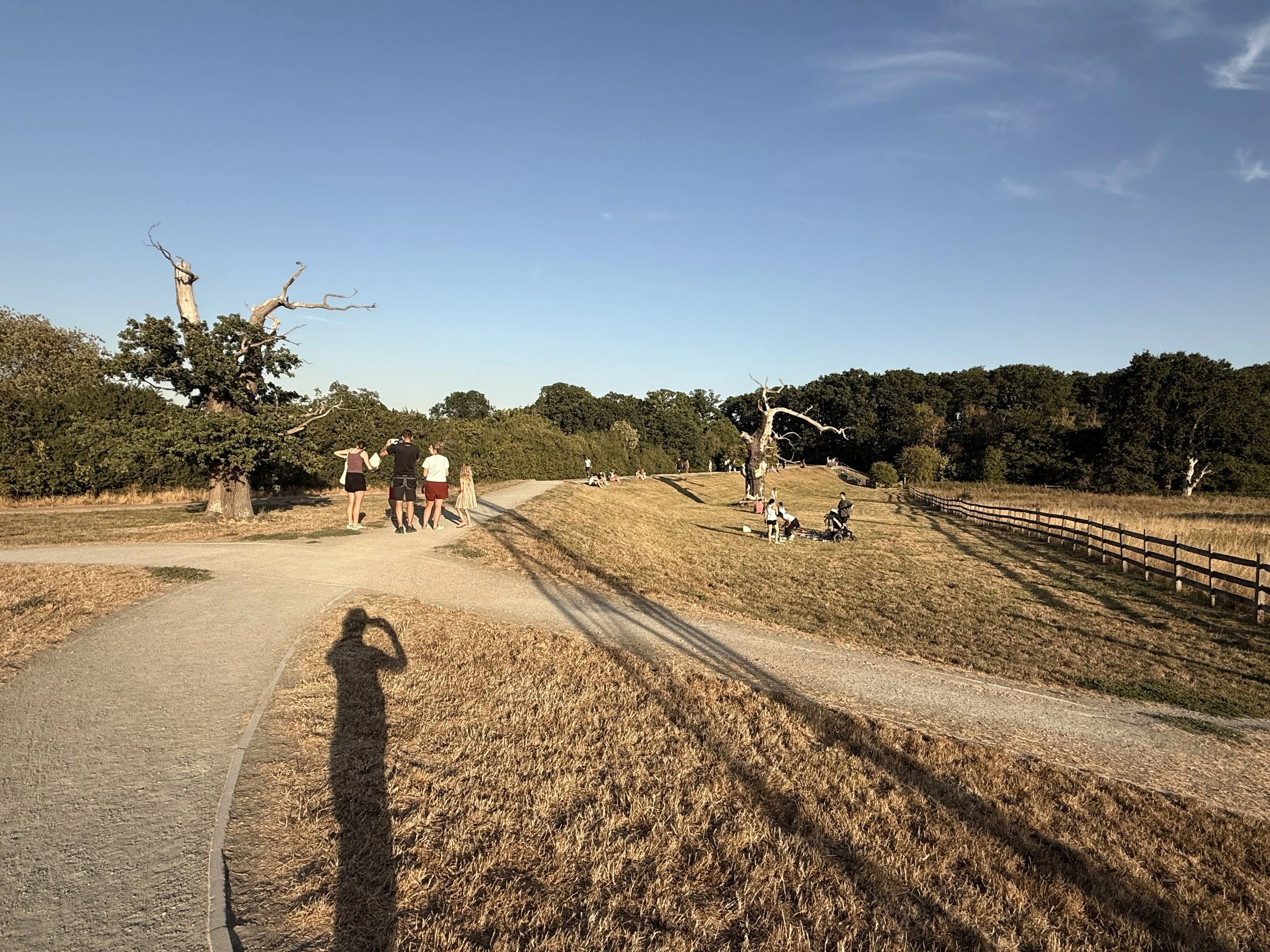
Have you ever been to Windsor? Have you ever spent time in the Great park, walking the paths across the fields? Or stood under the canopy of the great ancient oaks?

Today, I thought I wanted to write to you about something serious, like the power of presence, or dispelling shared loneliness, or stress and its impact on leadership.

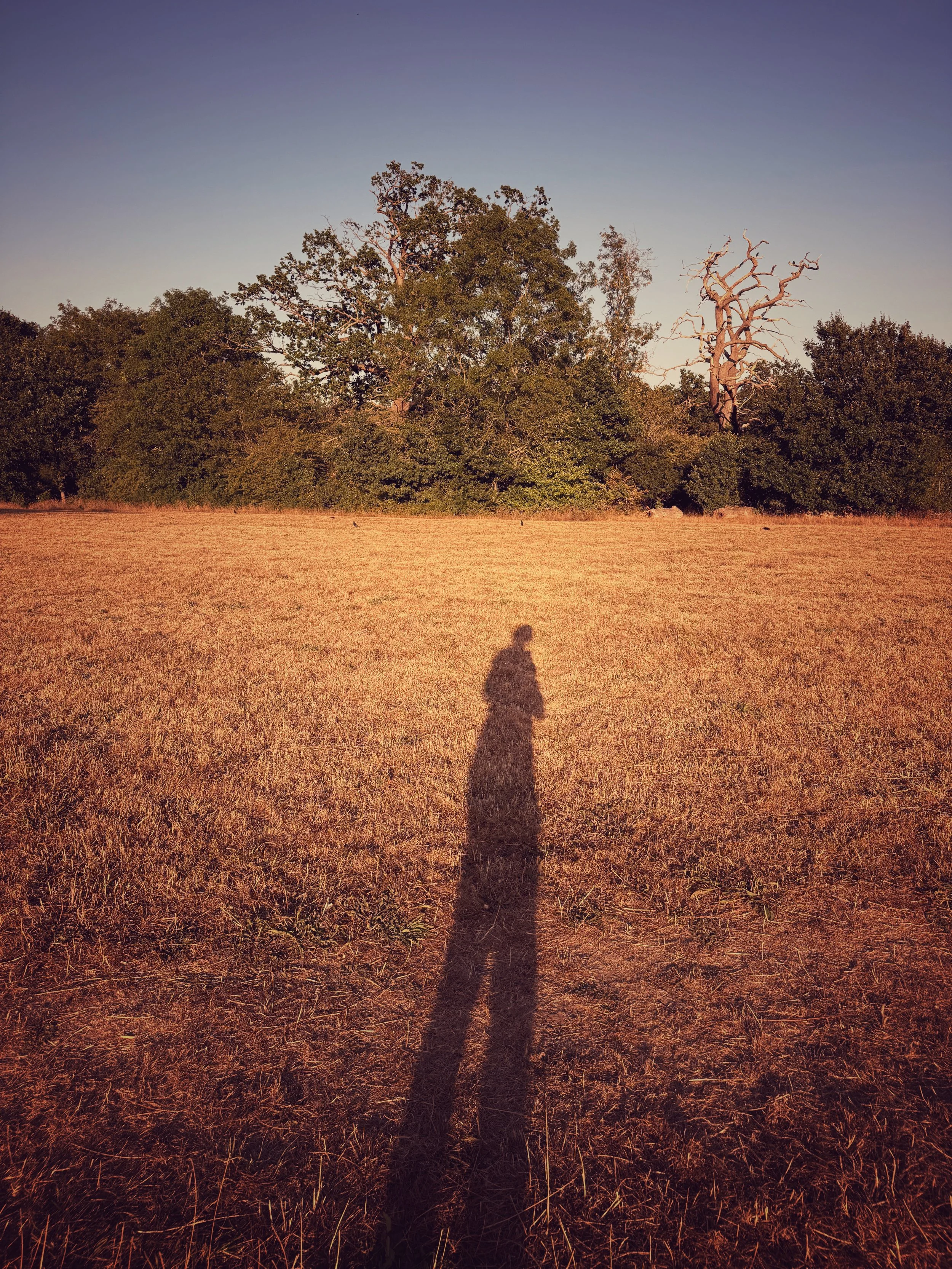
But as my fingers move over the keyboard, I find that I simply want to bring you here — to the fields that I have walked for 19 years. I want to give you a little bit of what these acres regularly give to me.

I think of you reading this from your desk in one of the big cities, wishing for less concrete, more green, and a slightly less soggy sandwich. Or maybe you sit with tea, in your home, in a small town with a romantic-sounding name, like Beacon, or Aurora. Or perhaps — as my imagination gallops off with itself — you live in a villa, with a view of the sand dunes of the Sahara, or on the edge of a rainforest in Thailand, near the elephants.

No matter where you live, the news, today, is full of war, and bombs, and sunken ships. There is a serrated edge to the alertness in the atmosphere. Sleep is being disturbed. Even in the rainforest, and in Aurora.

Please, then, come with me to Windsor.

This week, little by little, the thick-woven winter’s grey is being drawn back from the fields. There is an expanse of blue that feels bigger, and wider, and clearer than I remember. Perhaps, simply, because we haven’t seen it much in the last several months. The birds determinedly try to pull everyone’s gaze upward with their delighted swooping, as they search for bits and twigs to build this year’s homestead.

I know that it’s important to write about peace and presence, and how to connect with your own authentic leadership.

Those will be topics for another time.

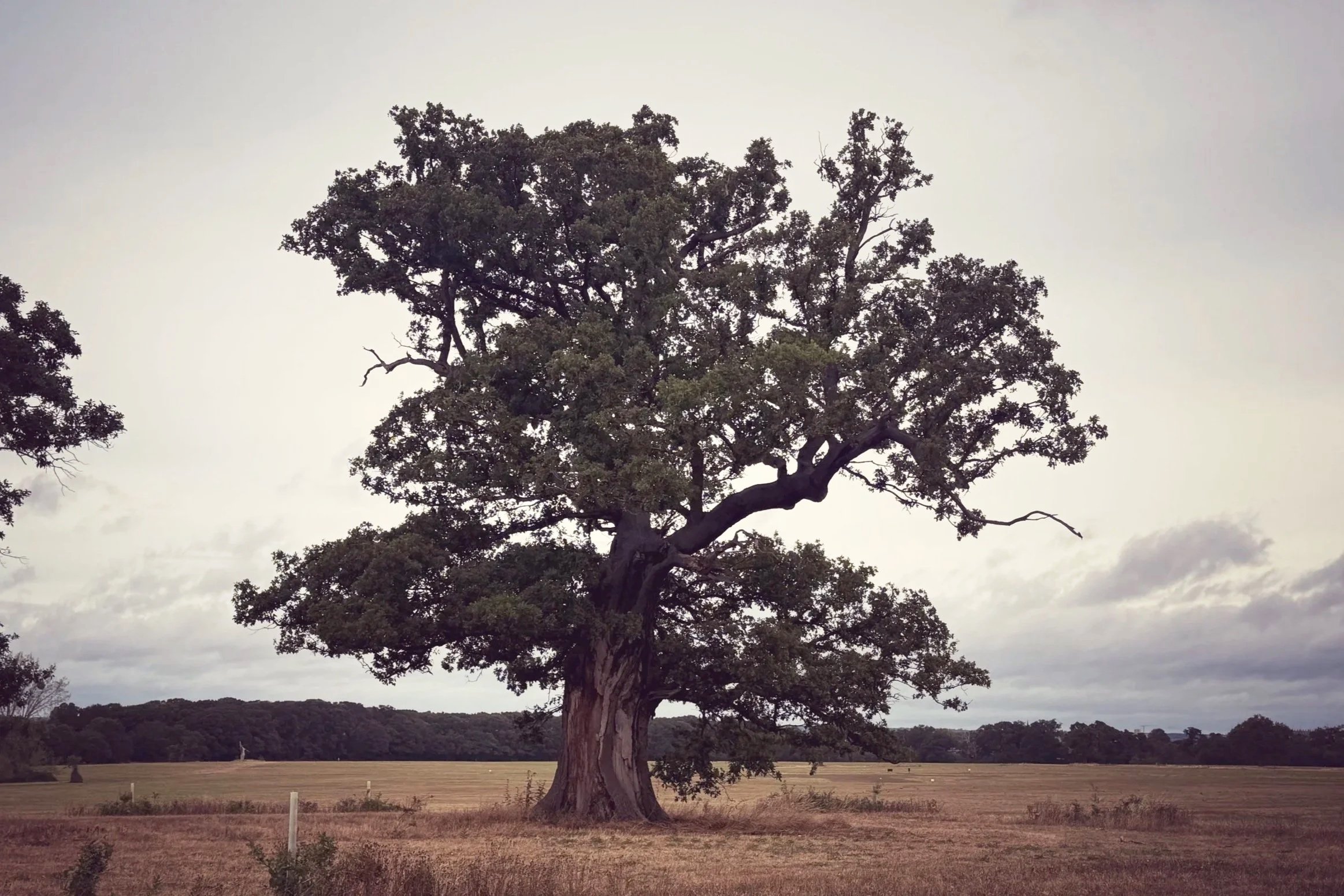
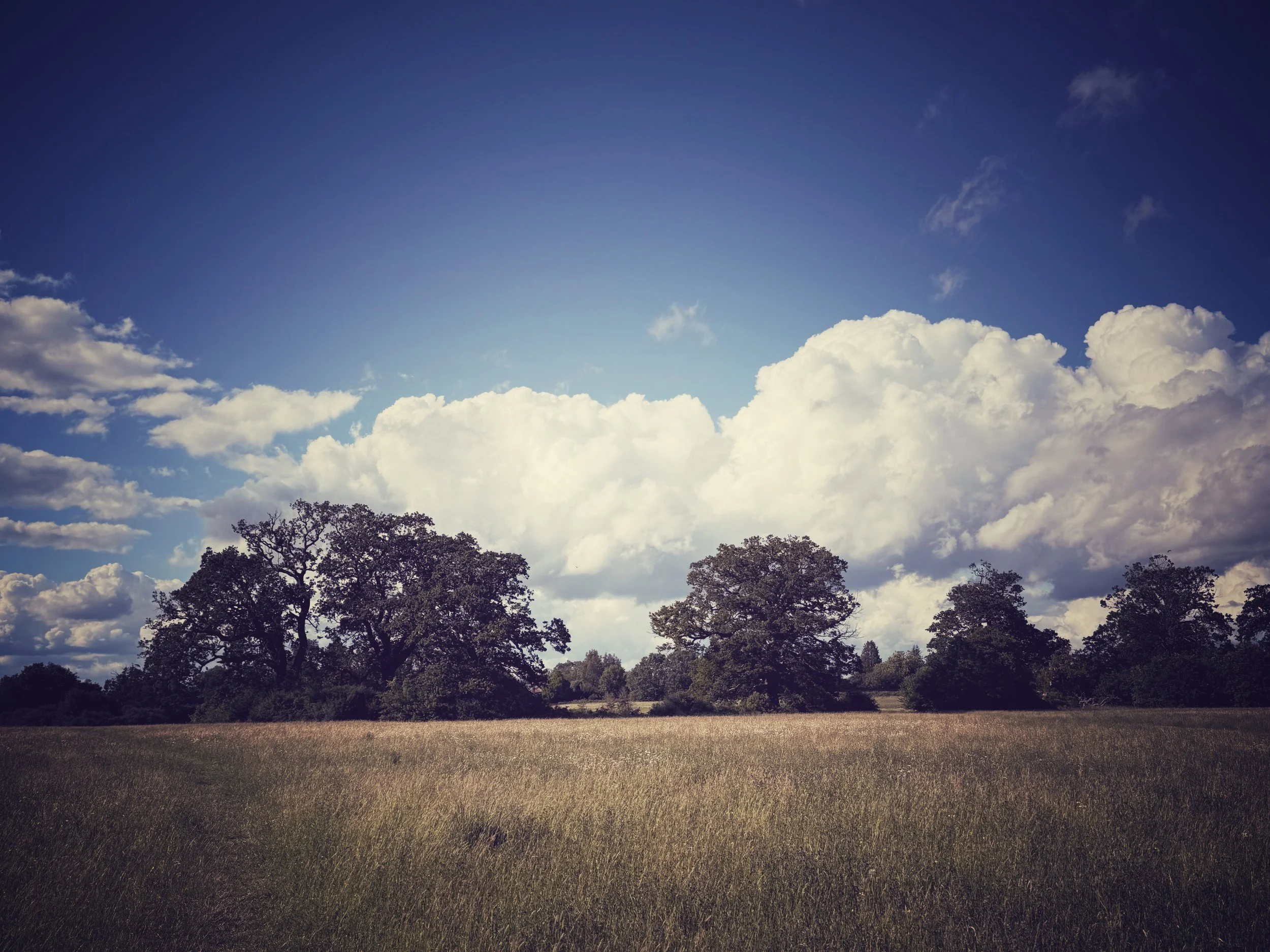
Today, you get to be here with me. With the ancient oaks, who have been standing in these fields for 500 - 1000 years. They have been through all of it — the wars and the peace treaties; the astounding discoveries, the miracles and the most radical of human mistakes.

I would love for you to feel held by the majesty and strength of these oaks. Each of them is unique with their branches patterns, like fingerprints.

This is your invitation to place your hand on the thick, buckled bark of the oak that calls to you.

Close your eyes. Raise your face to the sunshine. Fill your ears with the birds. Let the oaks welcome you, even as your feet sink slightly in the soft, muddy earth.

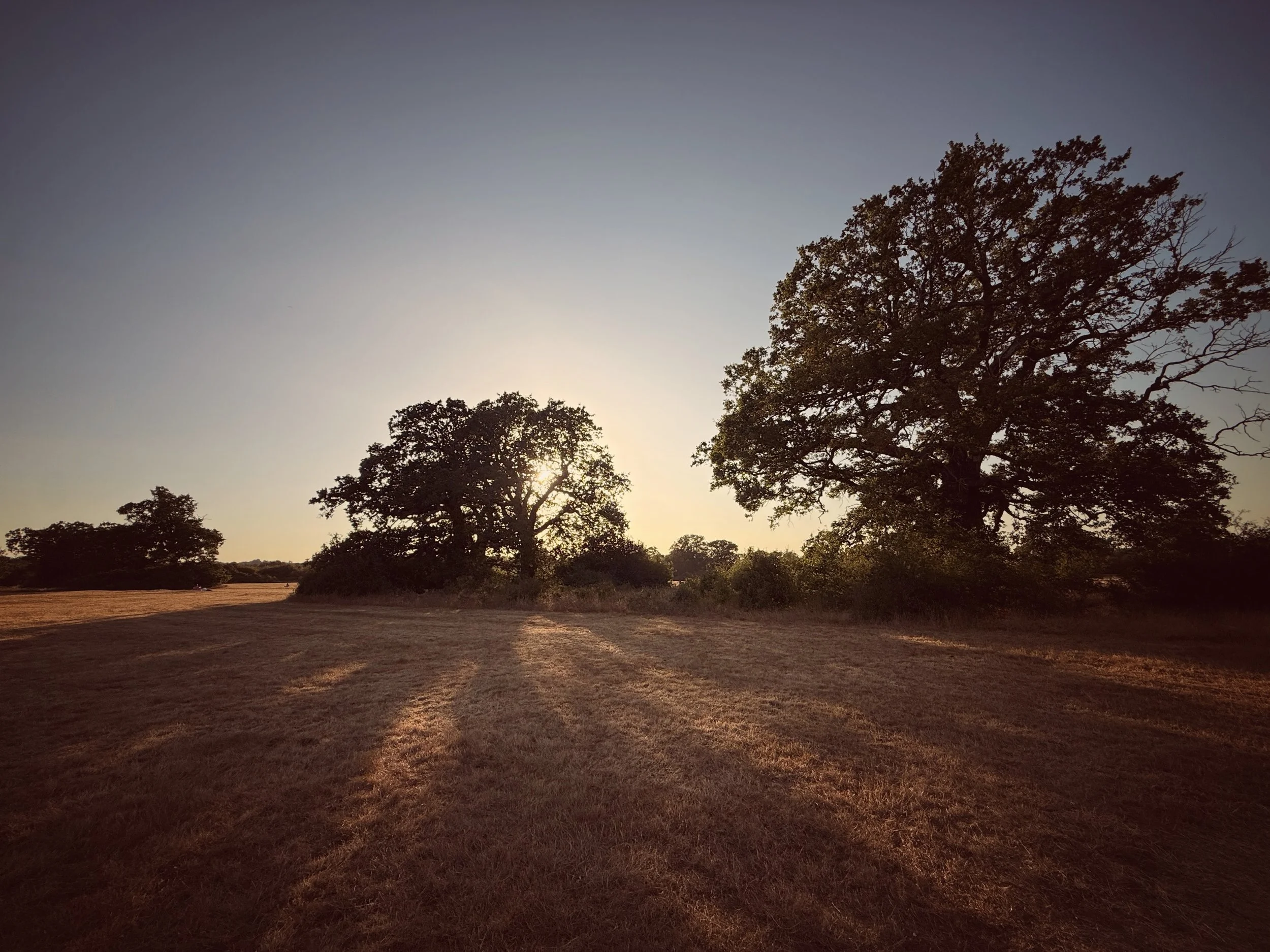
I want you to be delighted to discover two, chocolate-brown mushrooms in the grass at your feet. I would like for you to see the way the Spring-strengthened sunlight is caught, and split, into streaming beams by the winter-bare branches.

Feel the slowing down. In your breath. In your cells.

This morning, the fog was so thick, it made the world a smaller place. Once the sun rose, the smallness disappeared into a clearness that calls the bees to the blossoms in the hedgerows.

Ask what you need most as you unplug. From all of it.

There will be an answer, if you listen.

Return to yourself. Move from your head to your heart.

You have time before you need to pick up the next thing in your day.

You are, for now, in a place protected.

Feel what the oaks feel. You are safe.

This is a place where the double rainbows choose to shine.

Beaver Dams, Tadpoles and Stress

When I was ten, my class went on a field trip to a beaver dam. I remember all I wanted to see was the beavers. Instead I found myself staring at a jumbled pile of trees, twigs and mud and a pond behind it. Those beavers were smart enough to high-tailed it into hiding as soon as they heard the excited sound of twenty-eight chattering children.

In compensation for the lack of wildlife presence, my teacher equipped us with little nets and jars to gather the frog spawn clumped along the edges of the pond created by the beavers. Over the next few weeks, we hatched this spawn into tadpoles which, I believe (I hope!) my teacher liberated back into the wild to grow happily into frogs.

On that day I saw what beavers can do to a creek.

It’s much like what stress does to us.

In the beginning, a creek flows unimpeded, making its way from source to sea. The water winds its way along the stream bed, sometimes bumping up against a fallen tree, or over a large rock. But ultimately, the water moves, glinting and glimmering to its far away destination.

We are like the creek, flowing in our bodies, thoughts, feelings and creations.

Our lives are meant to be like watery currents, meeting obstacles,

yet moving around them with ease.

When the beavers choose a prime piece of real estate for their new home, everything changes quickly. It takes only a few days to a few weeks for the dam to be constructed. In the beginning, the initial debris impacts the flow of water, but doesn’t stop it. If the wood were to be removed at this juncture, the creek would resume its former path.

Eventually as the beavers build up the mud, wattle and wood, the creek’s flow diminishes. The water begins to build up on itself, creating a backwash of motion. This swirls in eddies and whirlpools.

On the outside, it looks and feels like the creek is motion. But the water goes nowhere. It is only looping back on itself. Eventually, the water rises, the flow slows, the energy stills and it becomes stagnant. The stream is now a pond, or a wetland. The ecosystem and habitat change from what it once was.

This is much like us in stress.

In stress, we contract: in our body, our fascia tightens to activate our force output. This is the force, we need to survive the enemy. We might fight, make a speedy escape or stay frozen in the face of danger. To survive, we also contract in our mind. Our thoughts and ideas narrow to keep us on track, on target and alive. This narrowing means we see the world, and the options available to us in a certain way.

We become like the water, believing we are in motion, but actually only swirling and looping back on ourselves. We work hard but end up experiencing the same results, no matter how much we try. Eventually, we find ourselves well and truly stuck.

We stagnate in our living without the movement and flow

needed to go in the direction of our dreams.

At first, it seems the obvious solution is to simply remove the dam. It might take humans twelve hours to deconstruct a beaver dam. The beavers will rebuild it in only a couple hours.

Like stress in our lives, the problem isn’t the dam. It’s how we relate to ourselves and the dam. When you know how to work with the beavers, more life becomes more possible.

Here are just a few cool eco-facts:

  • Beaver dams help to trap silt and improve the quality of the water.

  • Dams create wetlands. The wetlands create more biodiversity.

  • Frogs prefer ponds for breeding and their tadpoles are a bit of nature’s magic.

  • Tadpoles are able to adapt their metamorphosis timeline based on the food and living conditions in the pond. They can stay tadpoles longer, if they want.

  • Like starfish, tadpoles can regrow lost limbs.

  • Even in their not-quite frog larvae states, tadpoles have the ability to communicate with each other. (Apparently, the first known example of underwater larvae using sound for communication.)

So from stagnation, there is movement again.

The flow happens in a different way, through live force vitality and interspecies thriving.

Just as we, with the right support, practices and understanding, can transform how we move with and through ongoing stress in our lives.

I am in love with the Oaks

This year, I have fallen in love.

Not with a man. But with the trees. More specifically, I have fallen in love with the ancient and veteran oaks that live in large numbers, in the Windsor Great Park, near my home.

As I write, I feel some of you rolling your eyes at this idea of being in love with the trees. At one time, I might have done the same.

After all, how can you compare loving a tree with loving a human, especially one that stands by you through the significant challenges and joys of life? With a human, you can share conversation and common experiences. You can raise children together, or travel to exotic places. You can build a home or sit by each other’s sides when needed. You can put your arms around each other. Or hold hands as you walk along a beach.

None of this is possible with a tree. At least in the way humans do things.

I know that thus far in my life, I have been less than successful in my attempts to create a partnership, or marriage.

But just as I know that I have fallen in love with the oaks, I also understand WHY I have failed in human love. (Except, of course, for my daughter. She has a huge piece of my heart and always will.)

Over the years, as I learned more about the nervous system and the effects of chronic stress, I came to understand that we cannot love fully, completely and open-heartedly when we are chronically stressed. As much as I wanted loving partnerships in my life, I lived 30+ years chronically stressed, fighting against life, and love.

Stress is where we go when something inside us believes there is something to fear. Stress is where we go when our brains believe that some part of our current life is unsafe. When we are unsafe, we feel fear. The opposite of love is fear. I have lived the opposite of love for so long.

Living the opposite of love literally shapes us and our hearts. When we fear, our hearts shut down and retreat. They hide away in the fortification of the ribcage, blanketed deep within the lungs. Our fear shapes us so that we lead from our heads, not our hearts.

Over the last many years, I did the work that I call Moving Well. (The work that I offer to my clients.) The more I did the work, the more I eased myself out of my own perpetually stressed existence. I moved into a way of living that felt more peaceful, joyful and present.

As I shed my patterns, my heart moved out of its hiding place. It took up residence front and centre, just behind the top of my breastbone. Slowly, I learned to stand available in life. I learned to lead myself from my open and vulnerable heart — safe enough within myself not to need the old defences.

For many years, as I walked in the fields, the oak trees have been sentinels for my living. Now that my heart is free, they have come to claim it.

I find myself enchanted by these trees and all that they offer and represent. I am learning tree facts and fables. I am spending time with individual oaks — Getting to know them as friends and listening to the wisdom they have to share. For they do have wisdom. And they do want to share it.

So this Valentine’s day, I am in love.

It is a love that won’t be offended if I don’t bring roses, or prepare a meal.

Instead, all it wants is for me to offer my presence and time.

How lucky am I?