When I was ten, my class went on a field trip to a beaver dam. I remember all I wanted to see was the beavers. Instead I found myself staring at a jumbled pile of trees, twigs and mud and a pond behind it. Those beavers were smart enough to high-tailed it into hiding as soon as they heard the excited sound of twenty-eight chattering children.
In compensation for the lack of wildlife presence, my teacher equipped us with little nets and jars to gather the frog spawn clumped along the edges of the pond created by the beavers. Over the next few weeks, we hatched this spawn into tadpoles which, I believe (I hope!) my teacher liberated back into the wild to grow happily into frogs.
On that day I saw what beavers can do to a creek.
It’s much like what stress does to us.
In the beginning, a creek flows unimpeded, making its way from source to sea. The water winds its way along the stream bed, sometimes bumping up against a fallen tree, or over a large rock. But ultimately, the water moves, glinting and glimmering to its far away destination.
We are like the creek, flowing in our bodies, thoughts, feelings and creations.
Our lives are meant to be like watery currents, meeting obstacles,
yet moving around them with ease.
When the beavers choose a prime piece of real estate for their new home, everything changes quickly. It takes only a few days to a few weeks for the dam to be constructed. In the beginning, the initial debris impacts the flow of water, but doesn’t stop it. If the wood were to be removed at this juncture, the creek would resume its former path.
Eventually as the beavers build up the mud, wattle and wood, the creek’s flow diminishes. The water begins to build up on itself, creating a backwash of motion. This swirls in eddies and whirlpools.
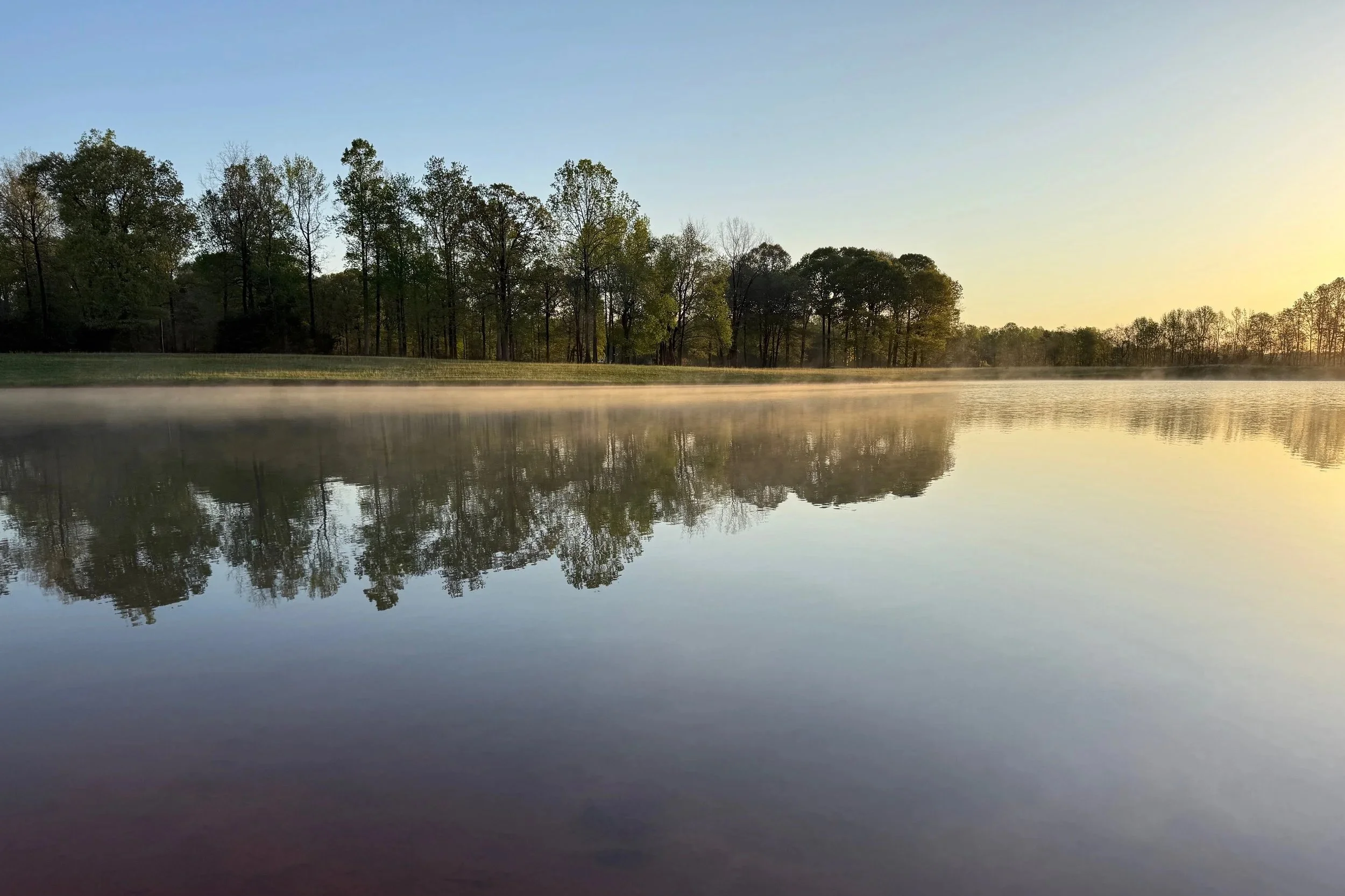
On the outside, it looks and feels like the creek is motion. But the water goes nowhere. It is only looping back on itself. Eventually, the water rises, the flow slows, the energy stills and it becomes stagnant. The stream is now a pond, or a wetland. The ecosystem and habitat change from what it once was.
This is much like us in stress.
In stress, we contract: in our body, our fascia tightens to activate our force output. This is the force, we need to survive the enemy. We might fight, make a speedy escape or stay frozen in the face of danger. To survive, we also contract in our mind. Our thoughts and ideas narrow to keep us on track, on target and alive. This narrowing means we see the world, and the options available to us in a certain way.
We become like the water, believing we are in motion, but actually only swirling and looping back on ourselves. We work hard but end up experiencing the same results, no matter how much we try. Eventually, we find ourselves well and truly stuck.
We stagnate in our living without the movement and flow
needed to go in the direction of our dreams.
At first, it seems the obvious solution is to simply remove the dam. It might take humans twelve hours to deconstruct a beaver dam. The beavers will rebuild it in only a couple hours.
Like stress in our lives, the problem isn’t the dam. It’s how we relate to ourselves and the dam. When you know how to work with the beavers, more life becomes more possible.
Here are just a few cool eco-facts:
Beaver dams help to trap silt and improve the quality of the water.
Dams create wetlands. The wetlands create more biodiversity.
Frogs prefer ponds for breeding and their tadpoles are a bit of nature’s magic.
Tadpoles are able to adapt their metamorphosis timeline based on the food and living conditions in the pond. They can stay tadpoles longer, if they want.
Like starfish, tadpoles can regrow lost limbs.
Even in their not-quite frog larvae states, tadpoles have the ability to communicate with each other. (Apparently, the first known example of underwater larvae using sound for communication.)
So from stagnation, there is movement again.
The flow happens in a different way, through live force vitality and interspecies thriving.
Just as we, with the right support, practices and understanding, can transform how we move with and through ongoing stress in our lives.